[RECIPE]
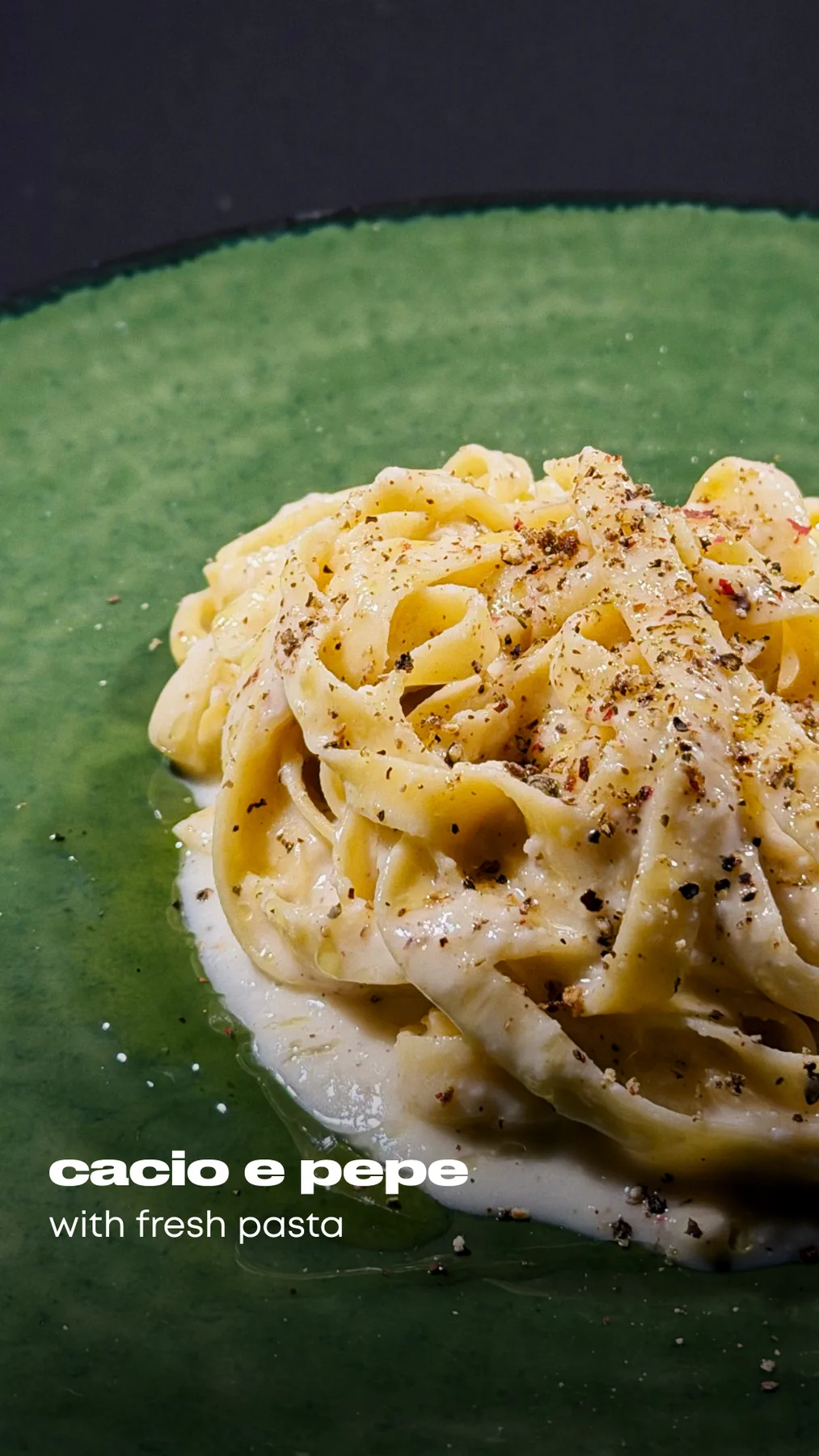
Weeknight Cacio e Pepe
A fast, deeply satisfying pasta that works just as well with homemade or store-bought noodles, built on cheese, pepper, and good timing.
- PREP
- 45 min
- COOK
- 10 min
- SERVES
- 4
INGREDIENTS
- 2 cup00 or all-purpose flour
- 2large eggs
- 3egg yolks, plus more as needed
- Semolina flour, for dusting
- Salt
- 1½ cupfinely grated Pecorino Romano, plus more for serving
- 1 cupfinely grated Parmigiano-Reggiano
- 1 tbspfreshly ground black pepper, plus more to taste
- 340 gtonnarelli or other long pasta (such as spaghetti or linguine)
- Olive oil
METHOD
Step 1: Make the dough
- 2 cups flour
- 2 whole eggs
- 3 egg yolks (plus 1 extra yolk or 1 tbsp water if needed)
Whisk the eggs and yolks in a wide bowl, then start pulling in the flour until a shaggy dough forms. If the dough looks dry and floury and will not come together, add the extra yolk or a spoonful of water.
Step 2: Knead and rest
- A little extra flour for dusting
Turn the dough onto a lightly floured surface and knead until smooth and elastic, about 4–5 minutes. Wrap tightly and rest at room temperature for at least 30 minutes and up to 4 hours.
Step 3: Roll and cut the pasta
- Semolina flour for dusting
- 3 baking sheets
- Parchment paper
Line 3 baking sheets with parchment and dust with semolina. Cut off ¼ of the dough, keeping the rest wrapped. Pass the piece through the pasta machine on the widest setting, folding and rolling a few times until smooth. Keep rolling, one or two passes per setting, until the sheet is about 1.5–2 mm thick and you can see your hand through it. Cut into long strands (tonnarelli, spaghetti, or linguine), dust with semolina, and form loose nests on the trays. Cover with a lightly damp towel and repeat with the remaining dough.
Step 4: Make the cheese mixture
- 1½ cups Pecorino Romano
- 1 cup Parmigiano-Reggiano
- 1 tbsp black pepper
- Salt
- A few tablespoons cold water
Bring a large pot of salted water to a boil. In a large bowl, mix the cheeses and pepper. Add a little cold water and stir until you have a thick, smooth paste that coats the bottom of the bowl. Add a pinch of salt if needed.
Step 5: Cook the pasta and build the sauce
- 340 g fresh pasta
- About 1 cup starchy pasta water
- 1–2 tsp olive oil
Cook the pasta in the boiling salted water until just shy of al dente, about 2–3 minutes. Scoop out about 1 cup of the cooking water before draining. Transfer the hot pasta straight into the bowl with the cheese paste. Toss quickly, adding splashes of pasta water and the olive oil a little at a time, until the sauce is glossy, creamy, and clings to the noodles.
Step 6: Serve
- Extra Pecorino Romano
- More black pepper
Twirl the pasta onto warm plates. Shower with more Pecorino and black pepper. Serve right away.
NOTES
- Fresh pasta cooks fast; start checking at around 2 minutes.
- The cheese paste should be thick but spreadable. If it looks dry or grainy, add a spoonful of cold water and stir until smooth.
- Add pasta water gradually when you build the sauce. It is easier to loosen a thick sauce than to fix one that is too runny.
- Freshly cracked black pepper gives the best flavor.
- Warm plates help keep the sauce creamy and prevent it from seizing on contact with cold surfaces.